
Grand Highlander Lease in NYC, Explained
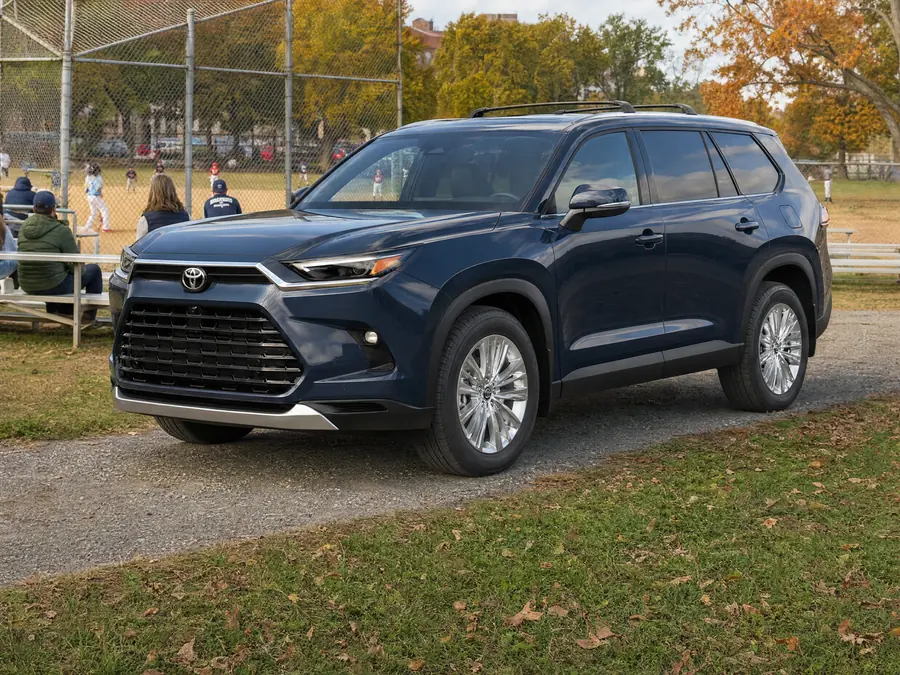
A lease ad for a Grand Highlander shows one big number, the monthly payment, and puts everything that decides the real cost in the fine print. To compare two offers you need five more numbers from that fine print, which are the amount due at signing, the term, the miles per year, the residual value and the money factor. In New York you also need to know how sales tax is charged, because on a lease it can be due up front.
This guide shows how to read a lease offer line by line, using an example with round numbers. It is not an offer. Lease terms change every month and depend on your credit, so ask for the current terms in writing before you decide.
The six numbers in every lease
Every lease disclosure, from Toyota or from any dealer, is built from the same pieces. Federal rules (Regulation M) require leasing companies to disclose most of them in writing, such as the payments, the amount due at signing and the purchase option, though not the money factor.
| Term in the fine print | What it means for you |
|---|---|
| Monthly payment, X months | What you pay each month, usually plus tax |
| Due at signing | Everything you pay on day one, often including the first month |
| Capitalized cost | The price of the vehicle the lease is based on, the number to negotiate |
| Residual value | What the vehicle is projected to be worth at the end, also your buyout price |
| Money factor | The lease’s interest charge, written as a small decimal |
| Miles per year | The allowance before you pay for extra miles |
The monthly payment is mostly the difference between the capitalized cost and the residual, spread over the term, plus the finance charge. A higher residual or a lower capitalized cost means a lower payment for the same vehicle.
Due at signing is not the same as down payment
This is the line that confuses people most. “Due at signing” usually bundles the first month’s payment, a down payment (called capitalized cost reduction), the bank’s acquisition fee, and usually registration and, in New York, sales tax. Two ads with the same monthly payment can ask for very different amounts on day one.
When we walk customers through a lease at our Fordham Road dealership, we break that number into its parts on paper. A useful habit is to compare offers on total cost instead of the monthly figure.
Monthly payment times the number of months, plus everything due at signing, minus the first payment if it is already counted there.
A worked example (not an offer)
Here is a made-up lease on a $45,000 SUV, to show the math. Say it is $450 a month for 36 months with $3,000 due at signing, and the $3,000 already includes the first payment.
The total cost is the remaining 35 payments ($15,750) plus the $3,000 at signing, which comes to $18,750 over three years. Divide that by 36 and the effective monthly cost is about $521, not $450. That effective number is the one to compare against any other offer.
Now take a second ad at $499 a month with $0 due at signing beyond the first payment. Over 36 months it totals $17,964, so the “higher” monthly payment is actually the cheaper lease. This is why we always show the total in writing.
Money factor and the 1% rule
The money factor is the interest on a lease, written as a decimal such as 0.00200. Multiply it by 2,400 to get a rough equivalent interest rate, so 0.00200 is about 4.8%. Ask for it in writing, because it rarely appears in an ad.
You may have seen the “1% rule” or the “1.5% rule” online. They are shopper rules of thumb, not official standards, that compare the monthly payment with the vehicle’s MSRP when nothing is put down. Under the 1% rule, a $45,000 SUV would be a strong deal at about $450 a month with $0 down. Some shoppers tolerate up to about 1.5%, which would be about $675, but a deal that high is usually only average. Treat both as a quick screen, then do the total-cost math above.
Miles, wear and the end of the lease
Toyota’s recent lease disclosures for the Grand Highlander in our region have listed 10,000 miles a year and 15 cents for each mile over, plus a disposition fee at the end of the lease, but terms change with each offer, so confirm them in writing (Toyota Greater NY offers). If you commute from the Bronx to New Jersey every day, 10,000 miles may not be enough, so ask whether you can buy extra miles up front, and compare that price with the per-mile charge at the end.
At the end you have three options. You can return the SUV, buy it for the residual value written in your contract, or trade it toward a new one. If the Grand Highlander is worth more than the residual at that point, that equity is yours to use.
New York sales tax on a lease
New York handles lease tax differently from many states. Sales tax is calculated on the total of the lease payments for the whole term, plus the amount due at signing and most fees charged at the start (NY Department of Taxation, Publication 839). It is collected when the first payment is due or when the vehicle is registered, whichever comes first. If the lessor agrees to lend you the tax, it can be built into the monthly payment, which raises the payment. The rate is the one where you live, and in New York City, the Bronx included, it is 8.875% (Publication 718).
Ask whether the payment you are quoted includes tax. “Plus tax” in an ad can add a lot at signing. On the example lease above, 8.875% of $18,750 is about $1,664, usually due at signing unless the lessor agrees to finance it.
2026 or 2027 model?
Both model years may be on the lot at the same time this season. The 2026 Grand Highlander comes with ToyotaCare scheduled maintenance for 2 years or 25,000 miles, while the 2027 drops to 1 year or 10,000 miles (ToyotaCare). On a 36-month lease, those extra months of covered maintenance are worth comparing next to the monthly payment.
When you are ready, ask our team for the current Grand Highlander lease on the Grand Highlander page. We send every term in writing, in English or Spanish. If you are weighing which version to lease, start with our trims guide.
Frequently asked questions
How much does it cost to lease a 2026 Grand Highlander? It changes every month and depends on the trim, your credit, the term, the miles and what you pay at signing. Ask for the current offer in writing and compare it on total cost, not the monthly payment.
What is the 1.5% rule when leasing a car? It is a loose shopper rule of thumb, not an official standard. Some people consider a $0-down lease acceptable if the monthly payment is at or below about 1.5% of the MSRP, while the stricter 1% rule is the common target for a strong deal.
Is due at signing the same as a down payment? No. Due at signing usually includes the first payment, fees and sometimes taxes, and may include a down payment on top.
Can I lease with an ITIN? Many lenders review ITIN applications, subject to approval. Our ITIN financing guide explains the documents to bring.
This article is educational and is not an offer to lease. Example numbers are hypothetical. All leases are subject to credit approval by the lender; terms vary and change monthly. Dealer sets final price.