
Wheelchair-Accessible TLC Vehicles (WAV): Requirements, Costs & Why Drivers Pick the Sienna
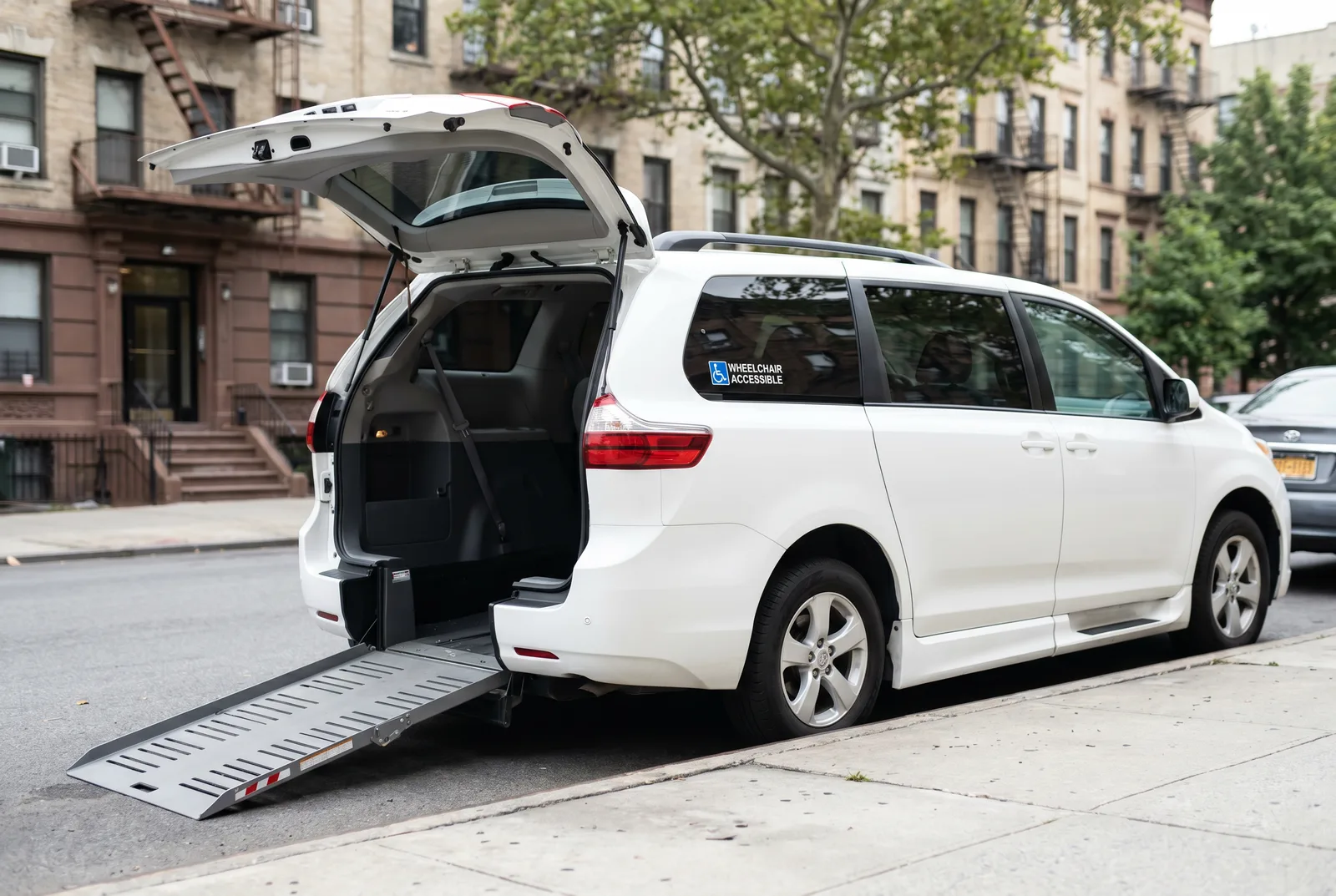
A wheelchair-accessible TLC vehicle (WAV) is a for-hire van fitted with a ramp or lift, securement points, and a lowered floor, driven by someone trained to assist passengers who use wheelchairs. In 2026 it is also the clearest path to a new NYC plate and steady platform demand.
What makes a vehicle TLC WAV-approved?
A WAV is not just a van with a ramp bolted on. The converted model has to meet a full set of standards, and the specific conversion has to appear on the NYC TLC approved vehicle list before you can put it into service. Confirm the exact converted model is on that list before you buy.
Here is the short version of what a compliant WAV includes.
| Requirement | What it means |
|---|---|
| Ramp or lift | A deployable ramp (rear-entry is common for for-hire work) or a powered lift for boarding |
| Securement points | Typically 4 securement straps that lock the wheelchair to the floor |
| Occupant harnesses | Lap and shoulder harnesses that restrain the passenger, separate from the chair tie-downs |
| Lowered-floor layout | A structurally lowered floor so a seated passenger has headroom and a safe entry angle |
| On the TLC approved list | The specific converted model must be listed by NYC TLC as an approved WAV |
| Driver WAV training | The driver completes WAV and passenger-assistance training before carrying riders |
Why a WAV is a business advantage in 2026
This is where a WAV stops being a compliance topic and becomes a business decision. New NYC TLC plates are capped, but a qualifying WAV is the open exception. For most drivers a WAV is the only realistic way to get a brand-new plate right now.
There is a second advantage stacked on top. Uber and Lyft operate under the city’s Green Rides rule, which requires a rising share of trips to be zero-emission or wheelchair-accessible. A WAV counts toward Green Rides the same as an electric car, with no EV purchase and no home charger to install.
For a driver planning around the plate cap and the Green Rides ramp-up, one vehicle answers both questions at once. If you are still weighing how to get a plate, read our guide to getting a new NYC TLC plate alongside this page.
What WAV service pays
Demand is real and structural, not a promotion. Uber and Lyft route wheelchair requests to WAV drivers, and NYC sees roughly 55,000 accessible for-hire trips every month.
wheelchair-accessible trips a month that Uber and Lyft route to WAV drivers in NYC.
Per-trip pay varies by platform and is not guaranteed. Independent analysis suggests Lyft pays a premium of roughly $15 above the base fare on WAV rides, while Uber tends to run closer to the standard fare. Treat these as directional. What matters for planning is that you serve a rider pool most drivers cannot, on platforms that actively send those trips your way.
The Sienna WAV vs other vans
The most common WAV base vehicles in this class are the Toyota Sienna and the Chrysler Voyager and Pacifica. For for-hire work the Sienna is the stronger long-term choice on the numbers that decide whether the van earns.
The Sienna wins on reliability, which keeps you on the road and off the repair lift. It wins on hybrid economics, because the BraunAbility and VMI conversions keep the Sienna Hybrid drivetrain intact, so your fuel cost per trip stays low across a heavy daily schedule. And it wins on resale, so the asset holds value when you cycle vehicles. The rear-entry commercial conversion is the version most for-hire drivers use.
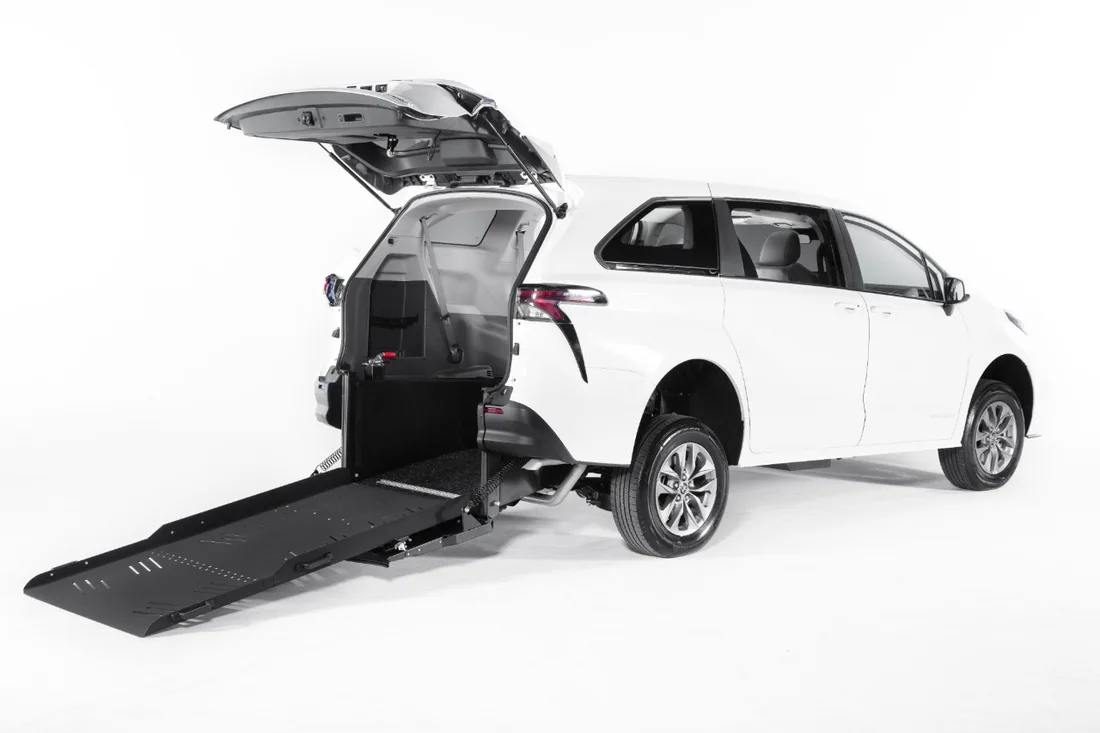
Want to see the actual van? Explore the 360 view on our Sienna WAV product page before you decide.
What it costs and how to finance it
A converted WAV Sienna runs roughly $65,000 to $108,000 depending on trim and conversion. That is a working number, not a raw sticker to swallow. The van is financeable, and it is an income-generating asset that qualifies you for a new plate and Green Rides credit at the same time. The right comparison is not the price against a personal car, it is the monthly payment against the monthly earnings the plate and platform demand make possible. See our guide to TLC financing with an ITIN or no credit for how drivers structure it.
Tax credits you may qualify for
New York State offers a tax credit of up to $10,000 for accessible taxicab and livery vehicles, and up to $15,000 if the vehicle is electric. You may qualify, but eligibility and amounts depend on your situation, so consult a tax advisor before you count on it. We do not apply yellow-taxi medallion grants here, because those are separate from for-hire WAV work.
Ready to move? See TLC-approved Sienna WAVs at Fordham Toyota and let our team confirm the approved-list model, financing, and next steps.
This article is informational only. TLC rules, fees, and programs change, so confirm the specific converted model is on the current TLC approved list. Consult a tax advisor about any credit. Earnings vary by platform and are not guaranteed.